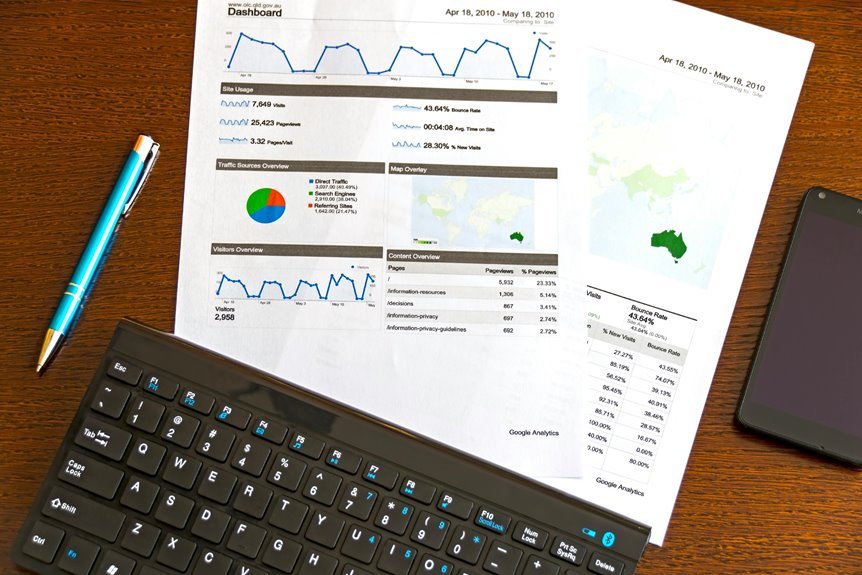
Next-generation market intelligence is reshaping the landscape of strategic decision-making through identifiers such as 120762065 and 970806969. By harnessing advanced analytics and AI-driven tools, organizations can gain deeper insights into consumer behaviors. This approach allows for real-time data tracking, enabling timely responses to market shifts. However, the implications of these advancements extend beyond mere analysis. Understanding the nuances of these identifiers could reveal critical trends that may redefine competitive strategies.
Understanding Key Identifiers in Market Intelligence
In the realm of market intelligence, key identifiers serve as critical markers that guide strategic decision-making.
Their identifier significance becomes evident in market segmentation, where businesses categorize consumers based on distinct characteristics.
By understanding these identifiers, organizations can tailor their approaches, ensuring they meet the diverse needs of their audience.
This nuanced insight fosters a sense of freedom in crafting targeted marketing strategies.
The Role of Advanced Analytics in Strategic Decision-Making
Advanced analytics emerges as a pivotal component in the landscape of strategic decision-making, particularly following the insights gained from key identifiers in market intelligence.
By employing predictive modeling, organizations can forecast trends and behaviors, enhancing their agility.
Furthermore, data visualization transforms complex datasets into accessible insights, empowering stakeholders to make informed decisions swiftly, thereby fostering a culture of strategic foresight and operational freedom.
Leveraging AI-Driven Tools for Enhanced Insights
Harnessing AI-driven tools significantly transforms the landscape of market intelligence by providing organizations with deeper, actionable insights.
AI optimization enhances decision-making processes, while predictive analytics enables firms to anticipate market shifts and consumer behaviors.
This convergence of technologies empowers businesses to adapt strategies effectively, fostering a culture of informed freedom that encourages innovation and responsiveness in an ever-evolving marketplace.
Real-Time Data and Its Impact on Market Trends
As organizations increasingly prioritize agility, real-time data has emerged as a critical component influencing market trends.
Real-time tracking enhances data accuracy, enabling businesses to respond swiftly to market fluctuations. This immediacy fosters informed decision-making, allowing companies to capitalize on emerging opportunities.
Consequently, the integration of real-time data not only reshapes strategic approaches but also empowers organizations to maintain a competitive edge in dynamic environments.
Conclusion
In the realm of market intelligence, organizations are akin to skilled navigators charting a course through turbulent waters. Just as a captain relies on advanced instruments to detect shifting tides, businesses equipped with identifiers like 120762065 and 970806969 harness real-time data and AI-driven insights to steer through market fluctuations. This strategic agility not only fosters resilience but also positions them to seize opportunities, ensuring they remain ahead in a landscape defined by rapid change and consumer unpredictability.